Understanding Gender Bias and Gender Similarities
Diverse Joy Podcast - Season 3, Episode 6
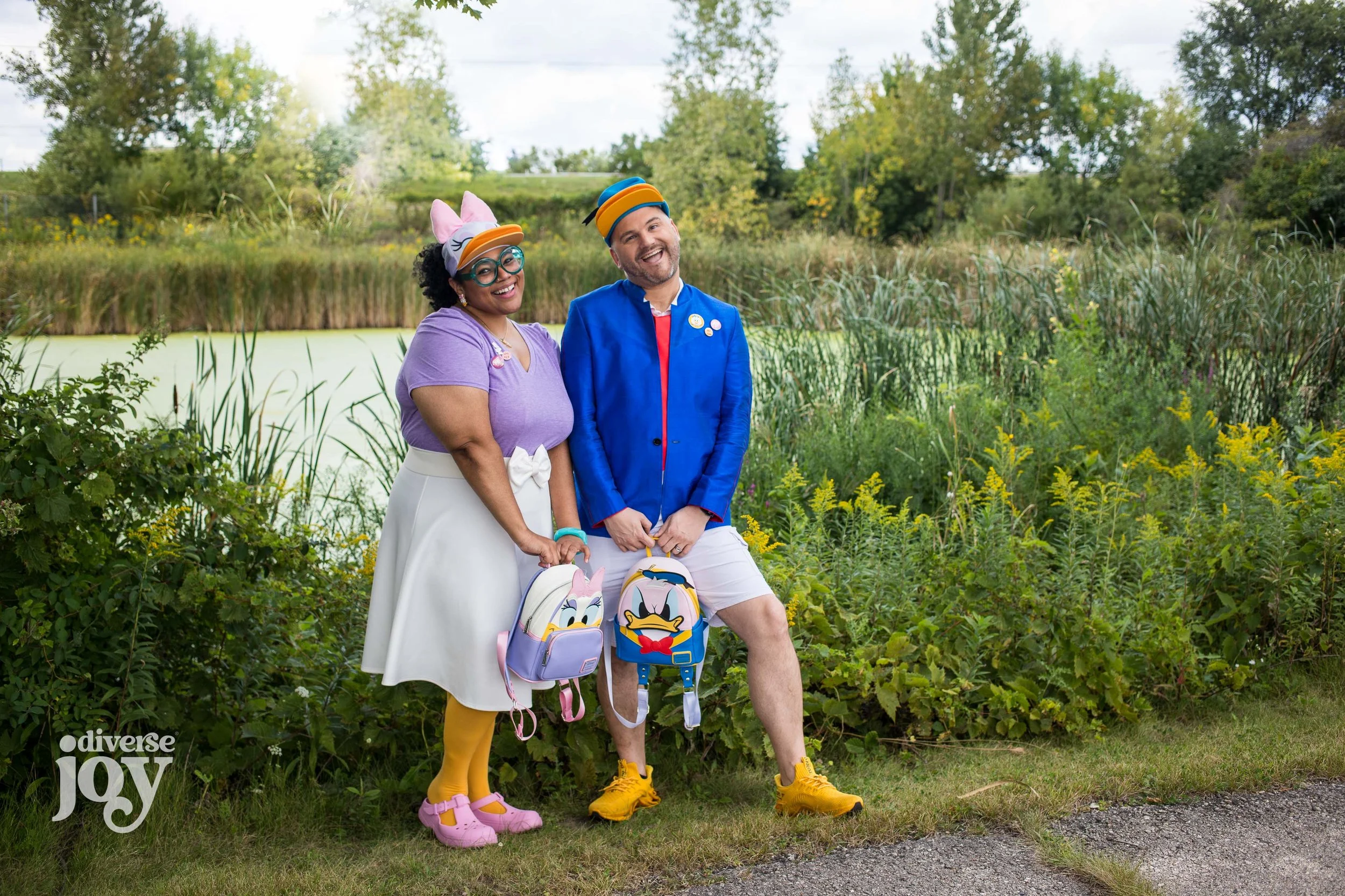
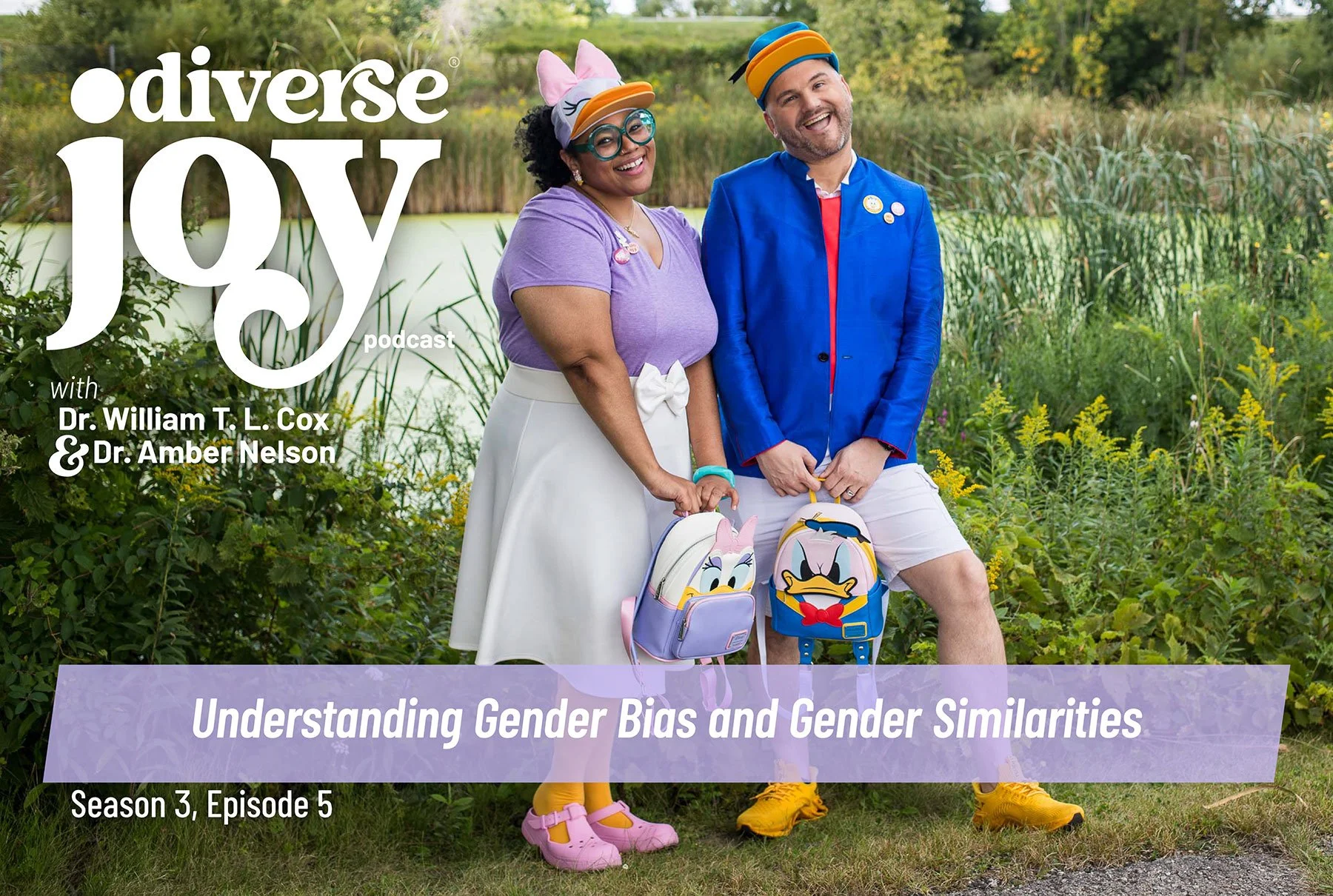
Amber and Will are dressed up as Daisy and Donald Duck for Disney Bounding month!
Will’s joy this month is his new routine of charging his phone in the kitchen at night, which has significantly transformed his sleep and his mental health all day long by not having his phone in the bedroom with him at night. Amber’s joy is the book Romanticize Your Life, which gives the reader daily recommendations to make their life more whimsical and fun, and Amber is enjoying the main-character-energy it is giving her.

Amber and Will pose for a selfie during the recording session of this episode, where they are Disneybounding as Daisy and Donald Duck
This month’s discussion topic is gender bias, which taps into how we treat kids differently based on gender and teach them gender, how women get taken less seriously in several domains–including science–and how people often devalue femininity or things associated with it (a problem some researchers, including Dr. Ashley Hoskin, call “femmephobia”). The hosts also talk about the “man vs bear” scenario that went viral last year and the “pink tax,” in which products marketed at women often cost more. They also discuss the gender similarities hypothesis from Dr. Janet Hyde, which argues (with LOTS of data) that men and women tend to be more similar than different on most psychological variables (it’s not “men are Mars, women are from Venus,” it’s “men are from North Dakota and women are from South Dakota”).
During story time, the first story involves an instance of people teaching gender norms, and the more positive story involves women’s sports being given more prominence and respect.

Dr. Cox and Dr. Nelson pose for a promotional photo while Disneybounding as Donald and Daisy Duck
This episode’s listener question is “What is the Bechdel test?” The Bechdel test, sometimes known as the Bechdel–Wallace test, is a litmus test related to the portrayals of women in movies and television shows. Amber mentions versions of the test that deal with other considerations, such as the Mako Mori test and the DuVernay Test.
This episode’s habit-breaking skill is to favor mindfulness over blunt, ineffective tools. Sometimes people try to bluntly shove away bias in their minds, which backfires. Rather than that, it is better to be mindful of bias and accept the reality that bias sometimes comes to mind, then you can work on making sure it does not affect your behavior. Mindfulness is a powerful tool in changing bias.
Amber’s joyful recommendation is the play, & Juliet! It’s a diverse, nostalgic, empowering jukebox musical, exploring what would have happened if Juliet of Romeo & Juliet had lived on after Romeo’s death. Check out the soundtrack!

The episode can be found below, by following the podcast wherever you get podcasts, including Apple Podcasts, Spotify, iHeartRadio, RSSFeed, Amazon/Audible, or by subscribing to @BiasHabit on YouTube.
Image Gallery for “Understanding Gender Bias and Gender Similarities”